When Something’s Missing…
What helps us feel more alive?
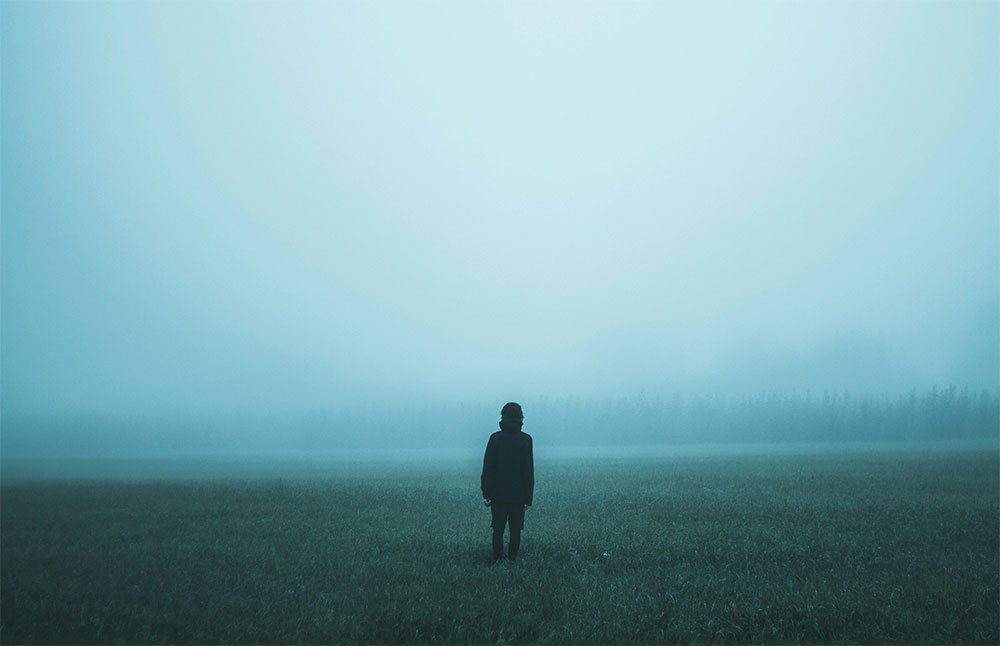
Photo: Jakub Kriz. Unsplash
Have you ever felt that something important, even essential, is absent from your life, but you don’t know exactly what that “something” is?
Perhaps nothing is obviously wrong, but your life just feels kind of flat. You may be functioning well: you go to work, attend to your responsibilities, keep appointments, answer messages, make plans, and take care of the countless things that constitute an ordinary life. From the outside, everything may look perfectly fine.
And yet, somewhere underneath all that activity, you sense that something’s missing. That “something” isn’t necessarily unhappiness. It may not even be dissatisfaction in the usual sense. It’s more elusive than that.
Perhaps life just doesn’t feel as vivid as you sense it could be or should be. Or you don’t look forward to things in the way you once did. Each day, week, and month have come to feel pretty much the same as the one before. Experiences that ought to be enjoyable seem strangely muted. You may find yourself increasingly seeking distraction or simply keeping yourself busy.
You’re functioning, but do you feel alive? Because functioning and feeling alive aren’t at all the same thing.
When Just Functioning Becomes a Way of Life
Modern life rewards our ability to just keep functioning. We learn to organize, accomplish, solve problems, meet expectations, and keep moving. There’s nothing inherently wrong with that. The ability to manage the practical demands of life is necessary and it can feel satisfying to complete a list of tasks, but having management of our lives be the main focus of our days can feel tedious and stressful, and is ultimately detrimental to our mental and physical health.
The problem comes when just functioning becomes our dominant way of being.
Because when that’s the case, our attention becomes habitually directed toward what needs to be accomplished next, rather than taking time to slow down enough to appreciate and enjoy the present. Even our leisure can become task-oriented. We consume news, entertainment, and social media to stay current, check destinations off travel lists, count our steps, measure our sleep, record our experiences, and photograph the sunset before we’ve really looked at it. Gradually, and often without realizing it, we can become very good at moving through life without being deeply touched by it.
As a result, life can begin to feel flat.
The Temptation to Change Something Big
When we experience a sense of flatness, it’s natural to look for an external explanation or conclude that the solution is to make a bold change to shake things up. We might think: Maybe I need a different job. Or should leave my relationship. Maybe I ought to move. Or travel. Meet new people. Change my appearance. Buy something.
Sometimes those impulses are good ones. There are times in life when we realize that some experiences have genuinely run their course. A relationship, a career, an environment, or way of living may no longer fit who we’re becoming. Restlessness can be an important messenger. But there is another possibility worth considering.
What if life feels empty not because our lives aren’t full enough, but because we’ve become less able to truly receive, experience and appreciate what’s in our lives already?
That’s a very different question. Instead of immediately asking What do I need to change? we might begin by asking: What have I stopped noticing?
Our Capacity to Be Affected
Think for a moment about experiences that have made you feel truly alive. Perhaps you were:
By the ocean when the clouds parted and the sun lit up the sky
Listening to a piece of music that moved you to tears
Absorbed in making something that mattered to you
Laughing so hard with a friend that, for a moment, you set all your worries aside
Looking into the face of someone you love and really feeling who they are and what they mean to you.
What such experiences have in common is that they prompt us to shift our focus and our attention. We stop—if only briefly—managing our lives and allow ourselves to be affected by what’s happening in the moment. Something outside the boundaries of our ordinary preoccupations reaches us. Time may seem to slow. We become present. And very often, in that experience, we encounter beauty.
What Do I Mean by Beauty?
Beauty as a word and a concept is at the heart of this column and in my work as a coach, and I want to be clear about how broadly I understand and use that term.
When I talk about beauty, I’m not referring only to objects or physical attributes such as bodily attractiveness, decoration, fashion, luxury, or treasured possessions we might deem to be beautiful. Beauty is far more mysterious and more encompassing than such examples suggest.
Beauty can be found all around us and in a myriad of ways if we have the desire and cultivate the capability to perceive it. There is beauty to be discovered in nature, music, art, scent, craftsmanship, movement, ideas, language, food, gardens, architecture, acts of courage, kindness, and unexpected tenderness, a young unlined face and a face weathered by age. And beauty doesn’t have to be pretty or pleasant to evoke deep feelings. Some experiences of beauty can evoke joy and awe, but others can contain an element of sorrow.
Part of beauty’s power is that it can interrupt our habitual thoughts and actions. We may be going about our ordinary business and suddenly something beautiful asks for our attention. We are called to stop and engage our senses: to look, listen, perhaps smell, taste, or touch, and to feel. And for a moment at least, to become receptive.
What If Beauty Is Not a Luxury?
Many people tend to treat beauty as an add-on to life.
We prioritize the serious things: work, money, health, responsibilities, practical concerns. Beauty can come later, if there’s time. But what if we have underestimated its importance? What if our capacity to respond to beauty is connected to our capacity for wonder, pleasure, creativity, love, and meaningful relationships with others and ourselves? All those things that may not make the daily priority list, but are essential to a sense of living a good life.
I’m not suggesting that that beauty can solve all our problems. It doesn’t. (I’ll leave a discussion of Fyodor Dostoyevsky’s famous comment that “Beauty will save the world” for another day). Genuine pain and suffering cannot be overcome simply by looking at great art, listening to exquisite music, or taking a walk in the woods and appreciating the trees. There are difficulties that require action, courage, grieving, support, and sometimes profound life changes.
But even in difficult periods, encounters with beauty can remind us that suffering is not the whole of reality.
Beauty is always with us in some form, even in the darkest of times. And sometimes it can be found in the most unexpected places. But we may need to remind ourselves how to recognize it.
Learning to Notice Again
The decision to seek and discover beauty may begin in remarkably ordinary ways. For example, you might begin to notice:
How light falls across a wall
The evanescence of steam rising from a cup of tea
The appealing smell of something cooking
A bird singing brightly outside a window
The soft texture of a piece of fabric
The graceful curve of a tree you pass every day
A carefully shaped sentence.
To pause and notice such ordinary experiences is to let go, at least for a moment, of accomplishing anything. There is simply something of beauty to notice. And perhaps something to receive. That last word matters. We can spend so much of our lives trying to change or just cope with the world around us that we can forget how to allow the world to affect us in a positive way.
An Invitation
Over the coming months, I’ll explore beauty from many directions—psychological, spiritual, mythological, and practical.
I want to consider beauty’s relationship to authenticity and creativity, nature and the senses, pleasure and eros, vulnerability and loss, relationships and meaning.
And I’ll explore an idea that has had a major influence on my work and my life for many years: that beauty may have a role in helping us become more fully ourselves and more fully alive.
For now, I’d like to begin with a small suggestion. For the next week, notice one beautiful thing each day. You don’t need to deliberately search for something extraordinary. Let beauty find you.
When something catches your attention—a sound, a face, a colour, a movement, a tree, a piece of music, an act of kindness—resist the impulse to move immediately on to the next thing. Stay with it for a few seconds. Let yourself receive it. And perhaps ask yourself:
What happens in me when I really allow myself to notice this?
Perhaps the way back from a life that feels mundane or strangely flat doesn’t always need to begin with changing something big in our lives.
Perhaps sometimes it begins with learning to see our lives anew.
Until next time, may you live in love and beauty,
Geraldine
This post was originally published on Substack