There’s a Hidden Hunger in Modern Life
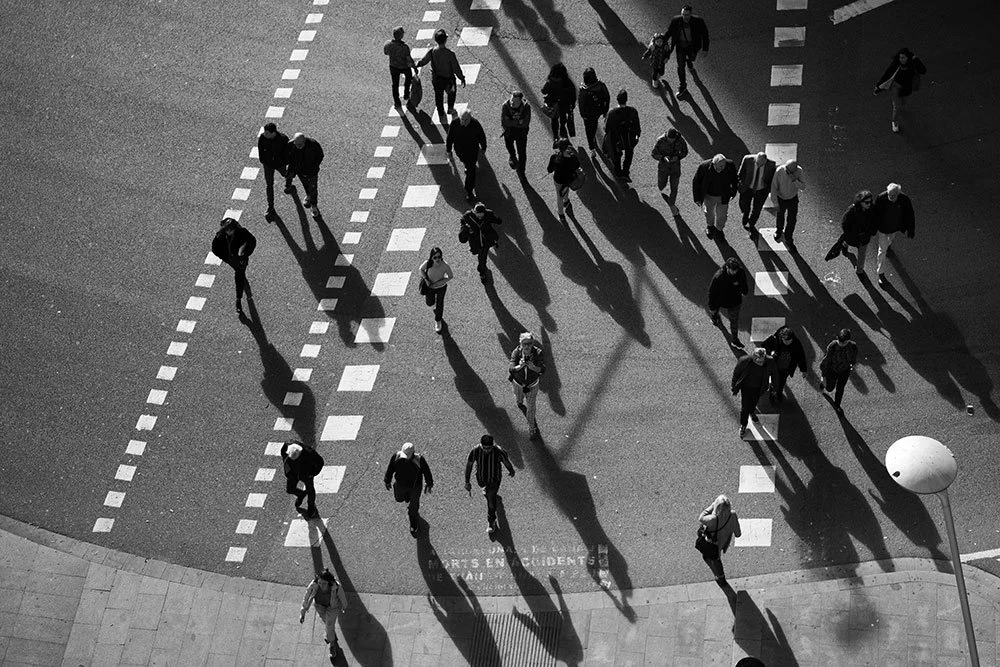
Photo: Levi Meir Clancy. Unsplash
In my last post, I wrote about feeling that something’s missing in your life even though everything might seem to be in order. You may be functioning well, attending to your responsibilities, and enjoying many aspects of your life, but still have the sense that nothing’s as vivid or meaningful as you’d like it to be.
I suggested that rather than assuming you need to make a major life change in order to shift an experience of flatness or ennui, it’s worthwhile reflecting on the question, what have I stopped noticing? I then highlighted the value of cultivating the capacity to notice beauty when it presents itself to you.
Taking a more expansive view, the fact that so very many people appear to be not just inattentive to beauty, but also inured to the lack of it (or at least the personal experience of it) in their lives, leads me to the question: Are we perhaps collectively hungry for beauty without realizing it?
Any feeling of hunger tells us that something we need or desire is absent. Some hungers, such as physical hunger arising from the need for food, are easy to recognize, though that’s not the case with every need and every form of hunger. Setting aside any compelling needs associated with problematic behaviours like addictions, some common social, emotional, and spiritual needs that we may hunger for are: the need for affection, meaning, intimacy, creativity, spiritual sustenance, and a sense of belonging. But there’s also another important, but often ignored, need that we may be hungry for—the need for beauty. Sadly, our need for beauty—in the broadest sense of that term—is rarely recognized or addressed in Western society which tends to focus on physical and superficial manifestations of beauty.
Is Beauty Truly a Necessity?
Identifying beauty as a human need may sound like an exaggeration. After all, we can certainly live without paintings on our walls, flowers on the table, lovely music, elegant clothes, or inspiring architecture. We know we can survive in environments that are drab, noisy, cluttered, harsh, or ugly. People do so all the time.
But we also know that humans have always sought out and created beauty and that begs yet another question: Why have human beings devoted so much time and energy to beauty if it’s optional for our physical survival?
There seems to be something intrinsic to humans that drives us to want a greater experience than just utility from what and whom we come in contact with. We’ve clearly demonstrated over time that we like objects that are not only useful, but also decorative. We prefer buildings that not only provide shelter, but also display graceful proportions and other design features intended solely to please the eye and lift the spirit. We want not only to communicate facts to one another, but also stories and poems that engage our imaginations and touch our hearts. And we’ve always valued personal attractiveness; we’ve encouraged and prized it in others and have endeavoured in various and often extreme ways to enhance it in ourselves. In short, history shows us that we have an inborn impulse to not simply survive in the world, but to make the world beautiful.
A World Planned for Function and Speed
Modern life with its attendant technologies has made our lives convenient in many ways (although as a side note, it appears that few of us are feeling less encumbered as a result of all our conveniences). We can accomplish things with astonishing speed. We can order almost anything we want without leaving home, speak instantly with someone on the other side of the world, access more information in an hour than our ancestors might have been able to access in months, years, or a lifetime, and we can entertain ourselves virtually without limit. Convenience and efficiency have become such dominant cultural values, at least in the West, that in our honouring of efficiency, functionality, and profit, we’ve created lives and environments that all too frequently fail to meet our innate need for beauty.
Also, in service to those collective values, we spend increasing amounts of our lives looking at computer screens. The irony of that reality is that while the digital world can give us access to an abundance of beautiful images, music, art, writing, and human creativity, at the same time, it exposes us to a relentless stream of advertising, disturbing news, conflict, superficial entertainment, and visual and informational clutter. We can scroll past a photograph of an exquisite Renaissance painting, a war zone, someone’s breakfast, an advertisement for shoes, and a funny cat video within thirty seconds. One unfortunate consequence of all that scrolling is that our capacity to pay sustained attention—to really take something in—becomes diminished, and a true experience of beauty always requires our attention.
What Happens When We’re Disconnected from Beauty?
I don’t think most of us wake up in the morning and think, I’m suffering from a lack of beauty. We’re more likely to say we’re tired, stressed, bored, restless, lonely, uninspired, or overwhelmed. Obviously, there can be many reasons for those feelings, and as I said in my previous post, I’m not suggesting that exposure to beauty provides a simple remedy for complex personal or social problems. But I do wonder whether some of the unease many people experience in contemporary life is related to living in ways and in environments that not only provide too little genuine nourishment for our senses and our souls, but also inhibit our potential for growth and change.
The Irish poet and philosopher John O’Donohue wrote and spoke extensively about our hunger for beauty. He understood beauty not as simply prettiness or decoration, but as something that meets a deep need within us and opens us to new dimensions of existence even as it may sometimes unsettle us. In his wonderful book Beauty: The Invisible Embrace (2004), O’Donohue described how beauty can catalyze personal transformation, “… it is part of the disturbance of the Beautiful that her graceful force dissolves the old cages that confine us as prisoners in the unlived life. Beauty is not just a call to growth, it is a transforming presence wherein we unfold towards growth almost before we realize it. Our deepest self-knowledge unfolds as we are embraced by Beauty.”
Beauty and the Soul
Throughout history, beauty’s been associated with the sacred. Beautiful objects, music, architecture, ceremony, scent, colour, and settings have played important roles in spiritual traditions across cultures. Beauty has the power to evoke the feeling that there exists something larger than our ordinary concerns and perhaps larger than ourselves. When encountering beauty we may experience awe, gratitude, reverence, wonder, or simply an inexplicable sense of being moved.
This is part of what the soul hungers for—not simply pretty objects or pleasant surroundings, but experiences that remind us, however briefly, that life contains mystery, depth, and meaning, if we will only give ourselves over to them. To again quote John O’Donohue, “We feel most alive in the presence of the Beautiful for it meets the needs of our soul. For a while the strains and struggle and endurance are relieved and our frailty is illuminated by a different light in which we come to glimpse behind the shudder of appearances the sure form of things. In the experience of beauty we awaken and surrender in the same act.”
I relate strongly to O’Donohue’s understanding of beauty. There have been many times in my life when I’ve felt that I opened to and received beauty’s transcendent embrace. One example is when I unexpectedly came upon a magnificent vista on the Isle of Skye that brought me to tears. Another is when I viewed Sandro Botticelli’s famous painting The Birth of Venus in the Uffizi Gallery and felt deeply affected by its beauty. These were both exceptional occurrences in my life—in part because they involved distant travel—and that added to their emotional impact and sense of personal meaning for me. But at countless other times, I’ve been transported by experiences that were quite ordinary: the scent of flowers in the air, the delicate shape of a teacup, witnessing a tender human interaction. In each of those precious experiences, beauty prompted me to shift my attention to the present moment, temporarily set aside my preoccupations, and connect to a greater sense of aliveness.
Where Our Hunger for Beauty Can Lead Us
All of us may at times hunger for a greater sense of meaning, pleasures that do more than merely distract us, richer sensory experiences, experiences of the sacred, or for opportunities just to slow down enough to become receptive to what beauty is offering us rather than constantly doing, managing, and accomplishing. Underlying each of those hungers is an even more fundamental one: the need and the desire to feel fully alive.
This is why attending to beauty matters. It’s not because surrounding ourselves with beautiful things or purposely seeking out beautiful experiences will somehow produce a perfect life. And it’s not because beauty allows us to avoid what is painful or difficult. Beauty matters because it can restore something that modern life can gradually dull: our capacity to be truly touched and positively transformed by the world.
Paying Attention to Your Hunger for Beauty
Over the next few days, I encourage you to pay attention to where beauty seems to be absent from your life as well as where it’s present.
Are there environments you spend time in that leave you feeling depleted?
Are there places that almost immediately make you feel better?
Is there music you love that you rarely listen to anymore?
Do you spend time outdoors and take in the healing power of nature?
Is there something creative and rewarding that you’ve stopped doing?
Are there objects in your home that still give you pleasure (or don’t)?
When was the last time you went somewhere simply because you thought it would provide you with an experience of beauty?
What kind of beauty are you hungry for right now?
The answer to that question will be different for each of us. It will likely also change at different stages of our lives, but simply recognizing that a hunger for beauty exists can be important. Perhaps some of the depression, anxiety, or restlessness so many people experience in modern life isn’t telling us that we need more things, more stimulation, more entertainment, or more achievement. Perhaps it’s telling us that we need to be more deeply nourished and perhaps beauty is one of the forms that nourishment can take.
Until next time, may you live in love and beauty,
Geraldine
This post was originally published on Substack